





Quick Appointment
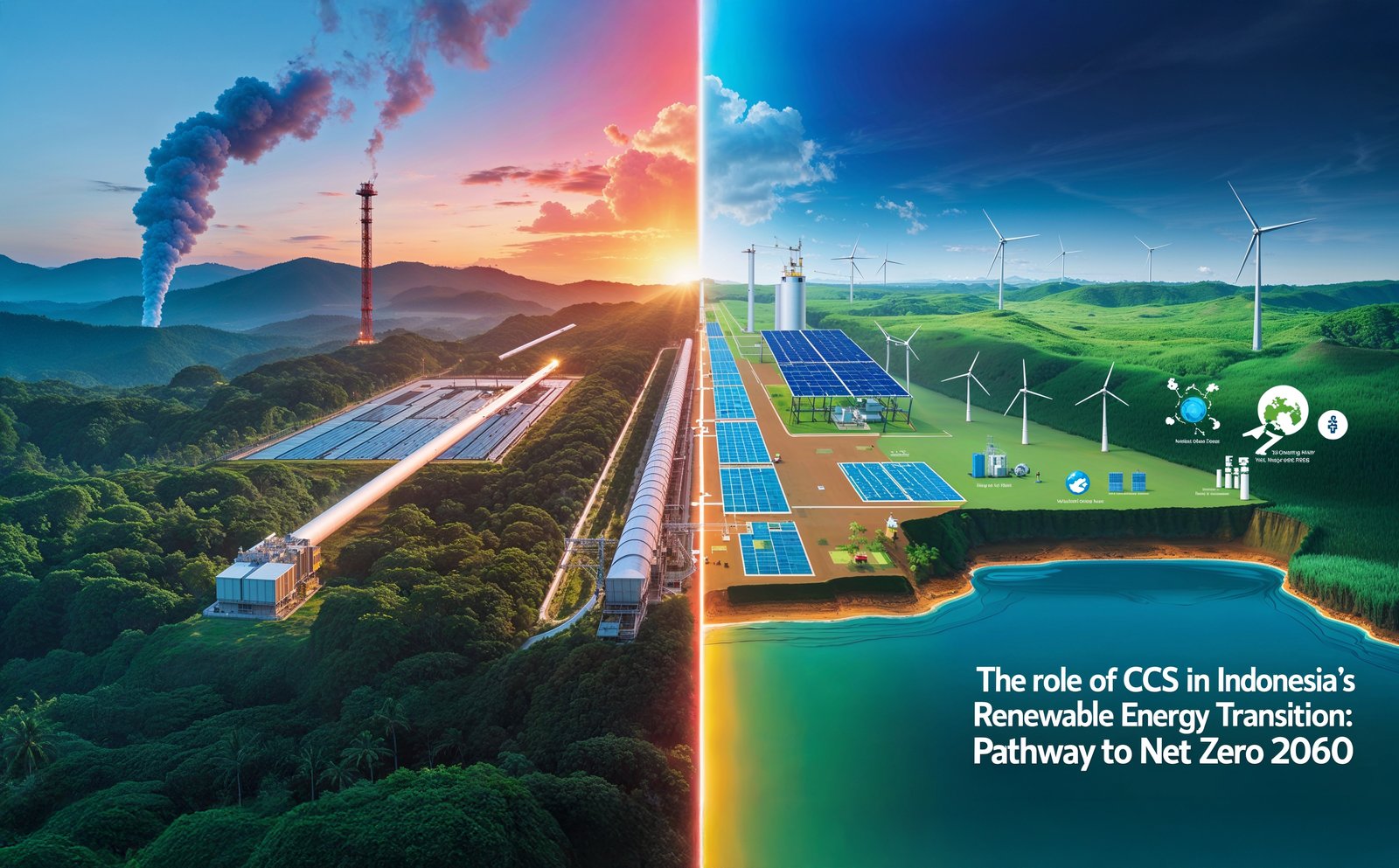
Indonesia, a country rich in natural resources, holds significant potential for renewable energy development. However, reducing carbon emissions remains a key challenge in achieving the nation's Net Zero Emissions target by 2060. One of the critical solutions being implemented is Carbon Capture and Storage (CCS) technology.
Integrating CCS into Energy Projects
Global energy companies are actively investing in CCS projects in Indonesia. BP and its partners have committed $7 billion to the Ubadari gas project in Papua. This project will incorporate CCS technology to enhance gas recovery by capturing and reinjecting CO₂ into reservoirs to maintain pressure levels. Production is expected to commence in 2028.
Additionally, Pertamina is integrating Bioenergy Combined with Carbon Capture and Storage (BECCS) as part of its emissions reduction strategy. One of its key BECCS initiatives is in South Sumatra, leveraging eucalyptus forests and adjacent oil and gas operations to enhance carbon sequestration.
Government Support and Future Targets
The Indonesian government aims to have 15 CCS/CCUS projects operational by 2030. Two major basins—the Sunda Asri Basin and the Bintuni Basin—are being developed as regional CCS hubs for East Asia and Australia.
Indonesia has an estimated carbon storage potential of up to 577.62 gigatons of CO₂, distributed across 20 locations. These storage sites come from two main sources: depleted oil and gas reservoirs (4.8 gigatons) and saline aquifers (573 gigatons).
The Indonesian state-owned electricity company is also committed to carbon reduction by integrating CCS into its coal-fired power plants. The company targets 2 GW of CCS implementation by 2040 and 19 GW by 2060, significantly reducing emissions in the power generation sector.
Collaboration and Challenges
Developing CCS technology in Indonesia requires strong collaboration between the government, energy companies, and stakeholders. Key challenges include high carbon capture costs, regulatory frameworks, and infrastructure development. However, with nearly 600 gigatons of carbon storage capacity, Indonesia has the potential to become a regional CCS hub in the Asia-Pacific.
Conclusion
The integration of CCS technology in Indonesia’s renewable energy sector highlights the country’s commitment to reducing carbon emissions and achieving Net Zero Emissions. With strategic partnerships, government support, and natural resource utilization, Indonesia is on the right path toward a clean and sustainable energy future.
